Lenovo
has been on a bit of a spree, launching a number of new smartphones in
quick succession. The company is good at creating models that cater to
specific needs, such as the
Vibe P1 (
Review |
Pictures) with its oversized battery, the
Vibe Shot (
Review |
Pictures) for camera lovers, the
Vibe S1 (
Review |
Pictures) for those who care most about looks, and most recently, the
Vibe K4 Note
for the budget segment. We now have with us the brand new Vibe X3,
which takes its place at the top of the heap as Lenovo's latest
flagship.
The
Lenovo Vibe X3 costs
just Rs. 19,999
but packs a number of features and attributes that might make it a
competitor to phones that cost way more. The spec sheet alone would give
us quite a bit to dig our teeth into, but
Lenovo
has also tossed in a few things that it says improve the user
experience in less tangible ways. We'll have to dig deep to find out if
that's just a marketing line or if the Vibe X3 really does blow all its
competition away.
 Look and feel
The Lenovo Vibe X3 looks nothing like the multi-coloured
Vibe X2 (
Review |
Pictures)
which launched in late 2014. In fact, it has a very strong resemblance
to the Vibe K4 Note, which shouldn't be surprising considering the
latter is sold in some territories as the Vibe X3 Lite. The phone comes
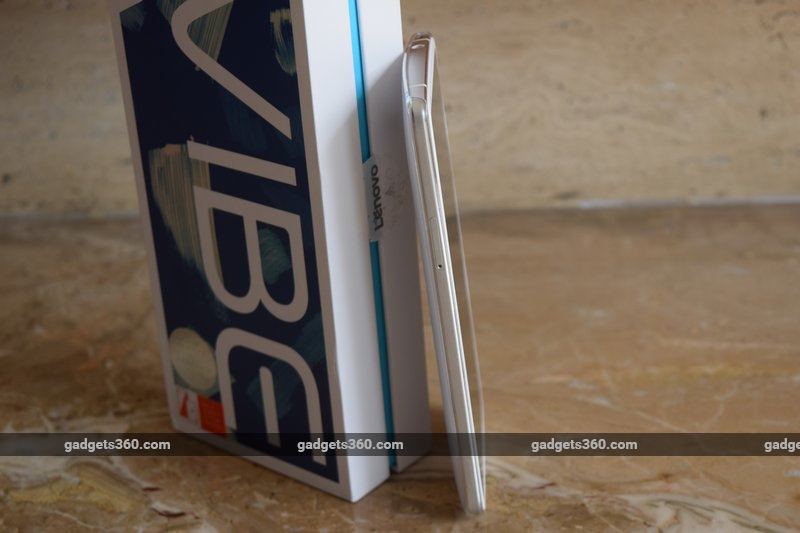
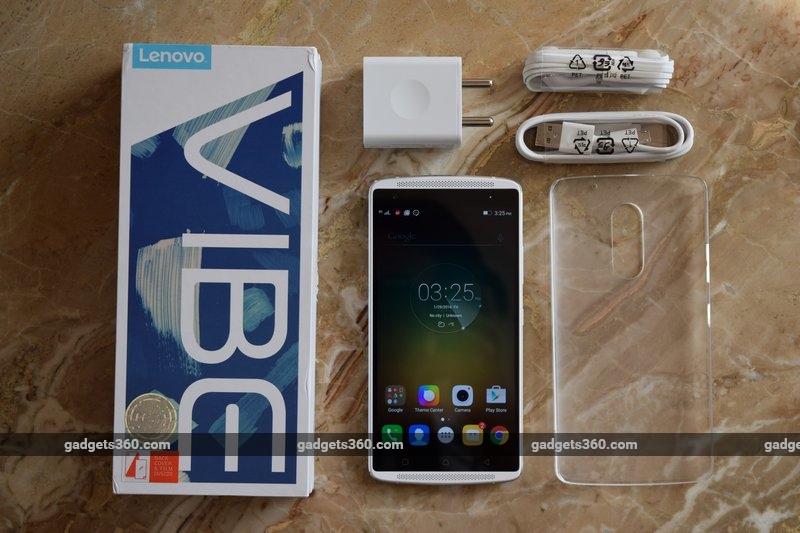
in a slick oblong box, and you'll find a neat clear plastic case and
adhesive screen protector along with the usual charger, USB cable, and
headset.
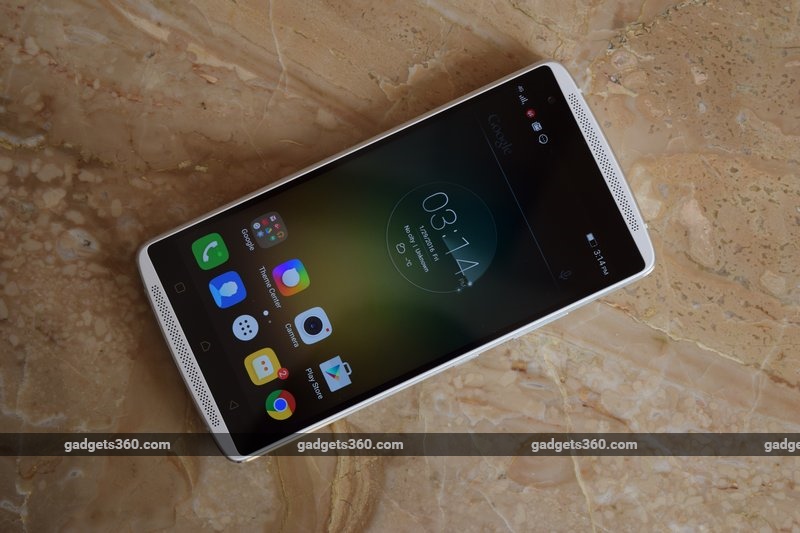
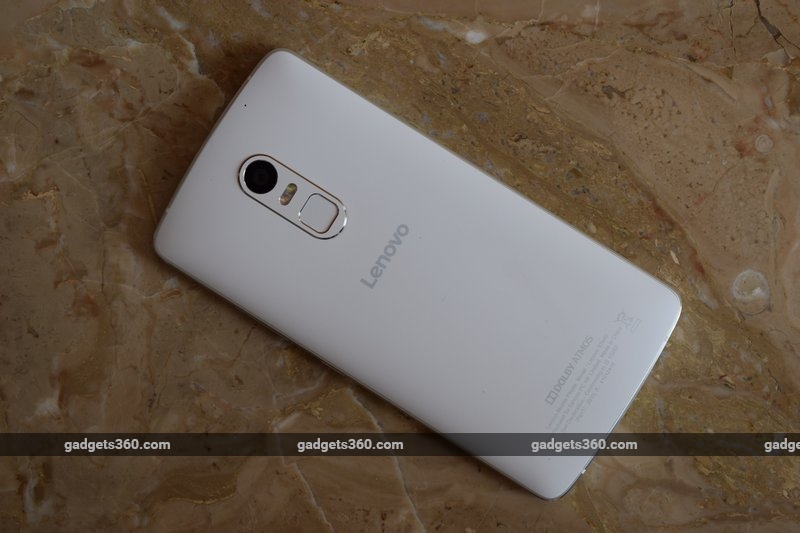
At first glance, the screen appears to be enormous, with
only narrow white plastic strips for the twin stereo speakers above and
below it. However, what you see is actually the black Gorilla Glass 3
extending beyond the screen to encompass the front camera, sensors and
status LED on top, and capacitive navigation buttons below.
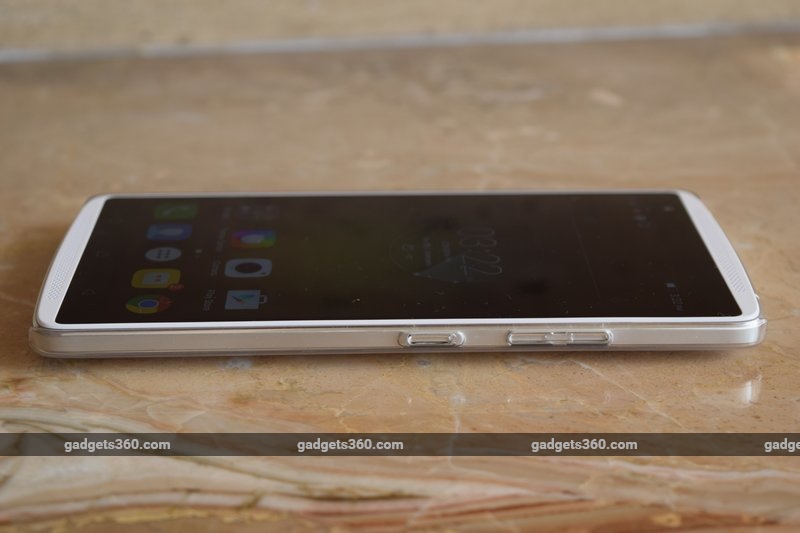
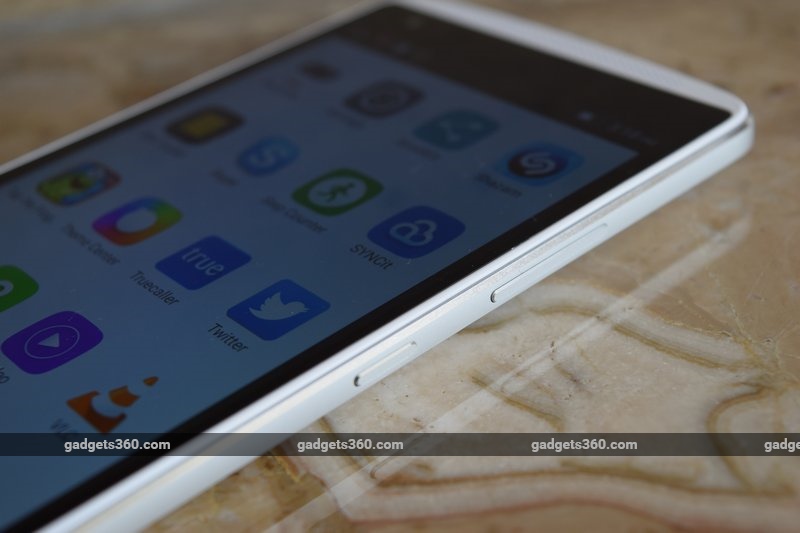
The
power and volume buttons are on the right, though a bit too low for our
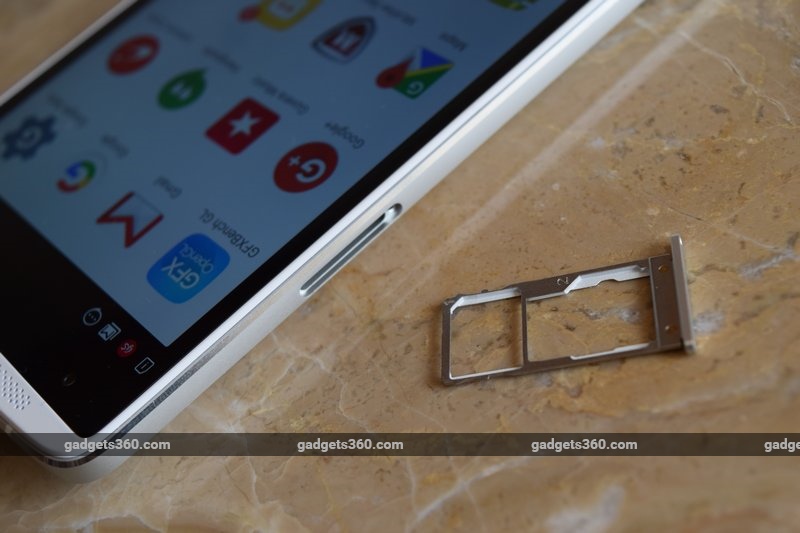
liking. There's a Hybrid SIM tray on the left, which means you get one
slot for the first Nano-SIM and another slot for either a second
Nano-SIM or a microSD card. This arrangement forces you to choose
between a second line and additional storage, which we are never in
favour of.
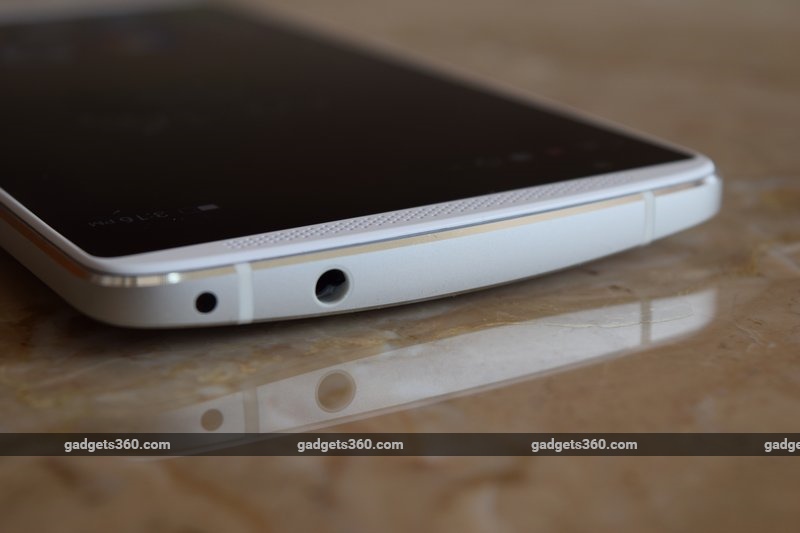
There's a 3.5mm audio socket on top, with a small IR
emitter to keep it company. You can use this in conjunction with an
included app to control a variety of devices. There's also a standard
Micro-USB port on the bottom which interestingly allows you not only to
charge and sync the phone as usual, but also to use the Vibe X3 as a
power bank to charge other devices.
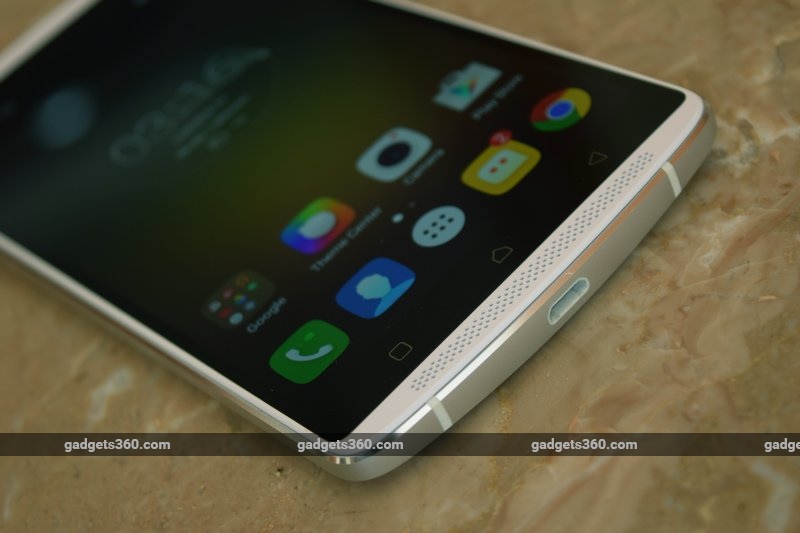
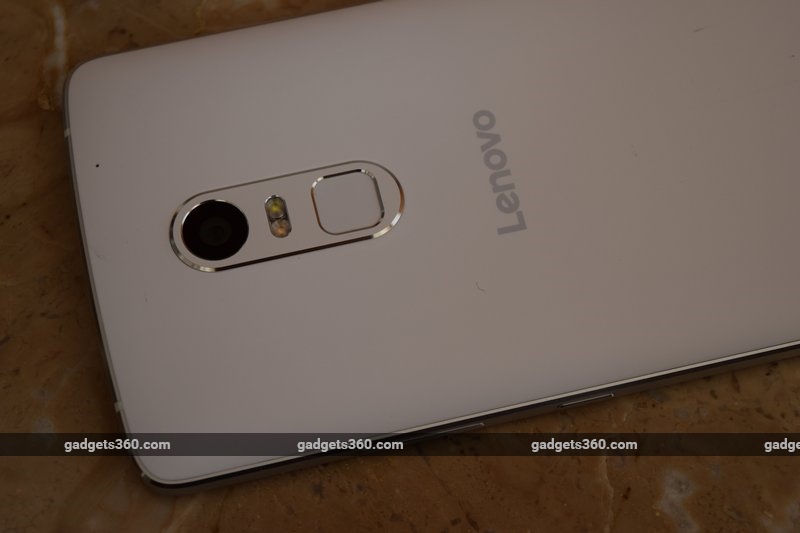
Around
the back, you'll see the primary 21-megapixel camera and fingerprint
sensor right below it. This is also where the phone's NFC radio is
located, and Lenovo says that wireless payments will be supported when
such services launch in India. You can also see a pretty big Dolby Atmos
logo on the bottom.
The battery is sealed inside the phone's
aluminium unibody. Lenovo says the matte white finish is resistant to
smudges and fingerprints, but we found a few scuffs within minutes of
taking the plastic cover off. We also noticed a few scratches on the
silver chamfered edges after a day or two of careful usage.
The
Vibe X3 is 9.3mm thick in the centre but this is masked quite
effectively by the curvature of the back. It fits nicely in a palm, but
using it one-handed is literally a stretch. The 175g weight is not as
easy to compensate for, and you'll definitely feel it when using this
phone for any length of time.
It isn't easy to reach the
capacitive buttons on the bottom without feeling like the Vibe X3 will
tip over. Amazingly for a phone that isn't scraping the bottom of the
budget barrel, the buttons are not backlit. It would have made a lot
more sense for Lenovo to have gone with on-screen buttons on this phone.
The ergonomics are just not quite as good as we expect of a phone that
claims to be its manufacturer's flagship.
 Specifications
Lenovo
has struck a balance between cost and performance, and so the Vibe X3
has at its heart a Qualcomm Snapdragon 808 processor, which is one step
below the current top-of-the-line Snapdragon 810, offering six CPU cores
and integrated Adreno 418 graphics. There's also 3GB of RAM which
should keep things chugging along smoothly. The 32GB of storage can be
bumped up by 128GB if you're willing to forego a second SIM.
Surprisingly, only 24.37GB was reported to be free on our review unit
when we turned it on for the first time.
The screen measures 5.5
inches diagonally and has a resolution of 1080x1920. Again, this is one
step below what other companies are offering on their flagships, but
considering the price, we feel that this is probably the right balance
of features for most people. Lenovo is quick to point out that the
screen can reproduce 100 percent NTSC colour gamut, and that colours are
consciously not oversaturated.
You
get Cat 6 4G LTE on Indian bands with support for carrier aggregation,
if and when that is supported by service providers here. There's also
Wi-Fi 802.11ac, Bluetooth, GPS, and NFC. USB-OTG functionality lets you
store more files on a Micro-USB pen drive or a standard one using a
dongle. The battery has a capacity of 3500mAh which should be more than
enough to get through a full day of heavy use.
One of the most
interesting facets of the Vibe X3 is its claimed high-end audio
credentials. There's a Wolfson 8281 processor with a three-mic array to
handle phone conversations, and an ESS Sabre 9018C2M DAC with three
TI-OPA1612 OP amps which kicks in when you're playing music or videos.
Lenovo also says the 3.5mm audio output is "studio grade" and
"lossless".
Lenovo
is also promoting its TheaterMax headset, which works with this phone
and its cousin, the Vibe K4 Note. It sells for Rs. 1,299 extra which is a
lot less than most VR headsets will cost. What it does is give you a
cinematic experience when playing movies - you don't have to have
specially prepared content. While interesting, it's not something you
can wear on your daily bus or train ride, so we're not sure how much it
will catch on. Lenovo did not send us a headset along with the Vibe X3,
so we can't say anything about the experience yet.
Software
Lenovo
has cleaned up its Vibe UI, which we're very glad to see. The default
UI is a lot more like stock Android, including its dedicated app drawer.
You can still switch back to the single-layer launcher if you like, but
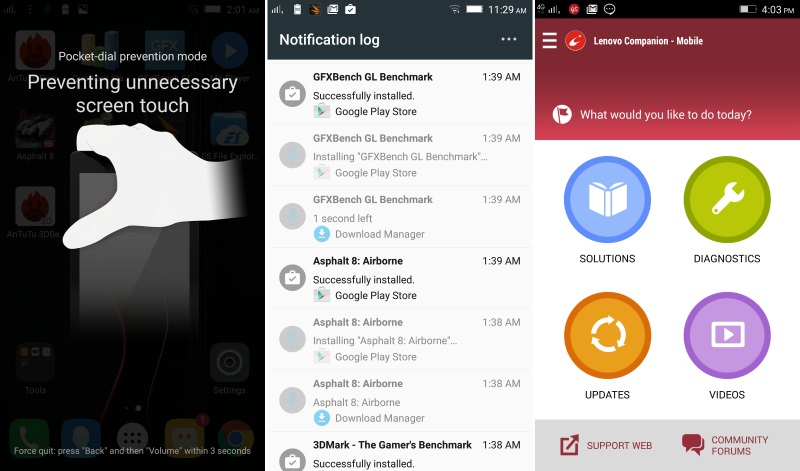
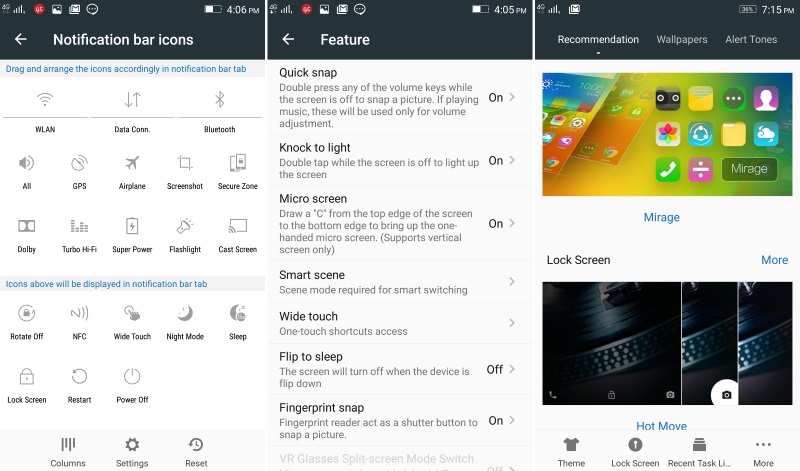
we don't think anyone will. There are of course customisations, most
noticeably the notifications shade which has lots of additional
quick-access toggles and a unique log feature that shows notifications
you've dismissed in the past.
The
icons still seem childish to us and we didn't find any adequate
replacement packs in the Theme Center app. Lenovo has preinstalled quite
a lot of apps, ranging from its own SHAREit, SYNCit, and Lenovo
Companion support app to Evernote, Facebook, Guvera Music, McAfee
Security Route 66 Navigate, Shazam, Skype, Step Counter, Truecaller,
Twitter, UC Browser, WeChat, and WPS Office. Game Store has some
low-quality games that you can play after setting up a profile. Peel
Smart Remote ties in to the IR emitter and shows program guides for
local TV channels. There's also one game, Tap the Frog. All of this
might explain all the missing storage space, but thankfully you can
uninstall most of them.
There are also quite a few custom settings
that help you get more out of the phone. You can double-tap the screen
to wake the phone, and also flip it over to lock it immediately. You can
take a photo directly from sleep by double-pressing either volume
button, and use the fingerprint sensor as a shutter button. If you need
to get something done with one hand, trace a C shape on either side of
the screen to shrink the display by about two-thirds, making everything
easier to reach.
 Cameras
The
Vibe X3 has a 21-megapixel rear camera with phase-detection autofocus
and an aperture of f2.0. You can record 4K video, though this isn't
enabled by default. There's also a front-facing 8-megapixel camera.
Lenovo promises multiple features for photographers, which mostly have
to do with the software interface, but we didn't find much to be
impressed with.
Lenovo's custom camera app takes a second or two
to load and has been over-simplified. The app automatically detects
lighting conditions and makes adjustments, but you can disable this if
you like. There are also scene modes including Panorama, Art Nightscape,
Artistic HDR, and Blur Background. Most options are two or three taps
away and not really labelled well - in fact you can't get to the video
settings when in video mode; you have to dip back into the standard
photo mode, tap twice to get to the settings, and then once again to see
video settings.


 (Tap to see full sized images)
A
Pro mode surfaces controls for some settings including shutter speed
and focal depth, but there really isn't much you can do even so.
Surprisingly, a menu appears when you switch to the front-facing camera,
giving you control over mirroring, shutter release gestures, quality,
and making the screen go bright for a second in lieu of a flash.
Photo
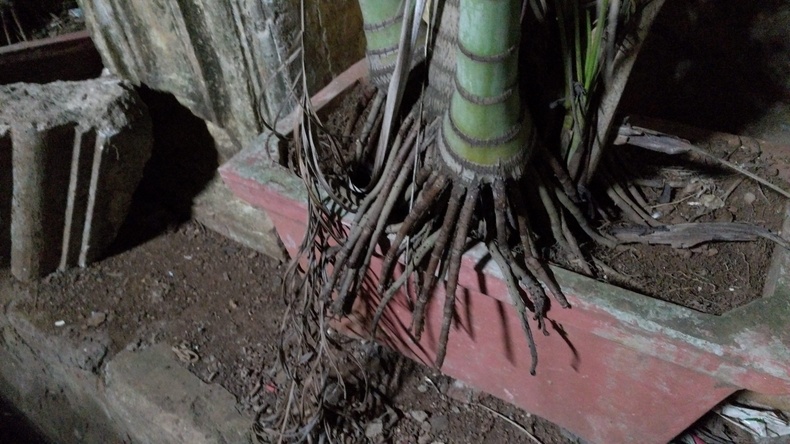
quality is okay most of the time, but a few of our daylight shots were
overexposed and shaky. Details and textures seemed to be artificially
smoothened out with over-aggressive software compression. Colours were a
bit on the dull side. Low-light shots came out okay but again, we
wouldn't want to use them for anything other than casual social media
sharing. You won't get anywhere with this camera if you need to zoom in
to photos and see them at their actual size. On the other hand, 4K and
1080p videos came out looking crisp and motion was smooth.
 (Tap to see full sized images)Performance
One
of Lenovo's main pushes with this phone is its screen, and true to its
word, colours are vibrant and engaging without being oversaturated.
Brightness can be pushed up to blinding levels and outdoor visibility is
not a problem at all. As far as the Vibe X3's audio pedigree goes,
there certainly is an improvement to sound reproduction when using good
headphones. Dual front-firing speakers are always nice to see, and while
these are loud, the sound isn't especially clear or engaging.
The
Vibe X3 was comfortable to hold, though the capacitive buttons were
definitely awkward. Since this phone is pretty much perfectly
symmetrical, we often ended up jabbing the wrong side and getting
frustrated when watching videos in landscape, especially in the dark. We
also would have preferred it to have been a lot lighter. The rear did
get slightly warm when we played games and ran benchmarks, but not
enough to become a problem.
Formal benchmarks showed that this
phone has quite a lot of power on tap. We got scores of 69,044 in AnTuTu
and 26,200 overall in Quadrant. GFXBench ran at a very impressive
34fps, and 3DMark Ice Storm Unlimited managed 15,453 points.
The
Vibe X3's battery lasted all day with plenty of usage including short
bursts of 4K video recording, lots of Internet usage, and a bit of
gaming. Our video loop battery test ran for 9 hours and 33 minutes,
which was just a shade below our expectations.
Verdict
Lenovo
has delivered very nearly the best components in circulation right now,
and considering that the price is just shy of Rs. 20,000, this is not a
bad thing by any means. The Vibe X3 aims to undercut popular phones
such as the
OnePlus 2 (
Review |
Pictures),
Moto X Play (
Review), and
Nexus 5X (
Review |
Pictures)
but is doing so on its own terms, by making the fight more about the
end-user experience than raw specs alone. We were impressed with how
much Lenovo has been able to cram in to a phone at this price, not just
in terms of specifications but also the little touches. Unglamorous
things like the notification shade improvements and the ability to
charge small devices over USB show that a lot of thought has gone in to
the creation of this product.
On
the other hand, if user experience is what matters the most, Lenovo has
some rough edges to polish. The Vibe X3 is a bit too bulky and heavy,
and not the easiest to hold or use. The biggest disappointment was the
camera performance, and then there are other annoyances such as the
hybrid SIM tray and off-balance capacitive buttons.
If you can
live with these things, you'll find that the Lenovo Vibe X3 delivers
excellent value for money. Lenovo has joined a growing list of companies
that have made it hard for a lot of people to justify spending double
or triple this amount of money for a flagship Android phone from a
top-tier manufacturer.
 Short Bytes:
In a recent interview which was a part of the 60 Minutes segment on
Apple, Apple CEO Tim Cook detailed the qualities Apple needs in
a candidate. These qualities include a desire to do things differently, a
different way of looking at things, and a lot more. Read the article
and know everything Apple CEO had to say.
Short Bytes:
In a recent interview which was a part of the 60 Minutes segment on
Apple, Apple CEO Tim Cook detailed the qualities Apple needs in
a candidate. These qualities include a desire to do things differently, a
different way of looking at things, and a lot more. Read the article
and know everything Apple CEO had to say.